This guide is part of our series on AI for branding and design.
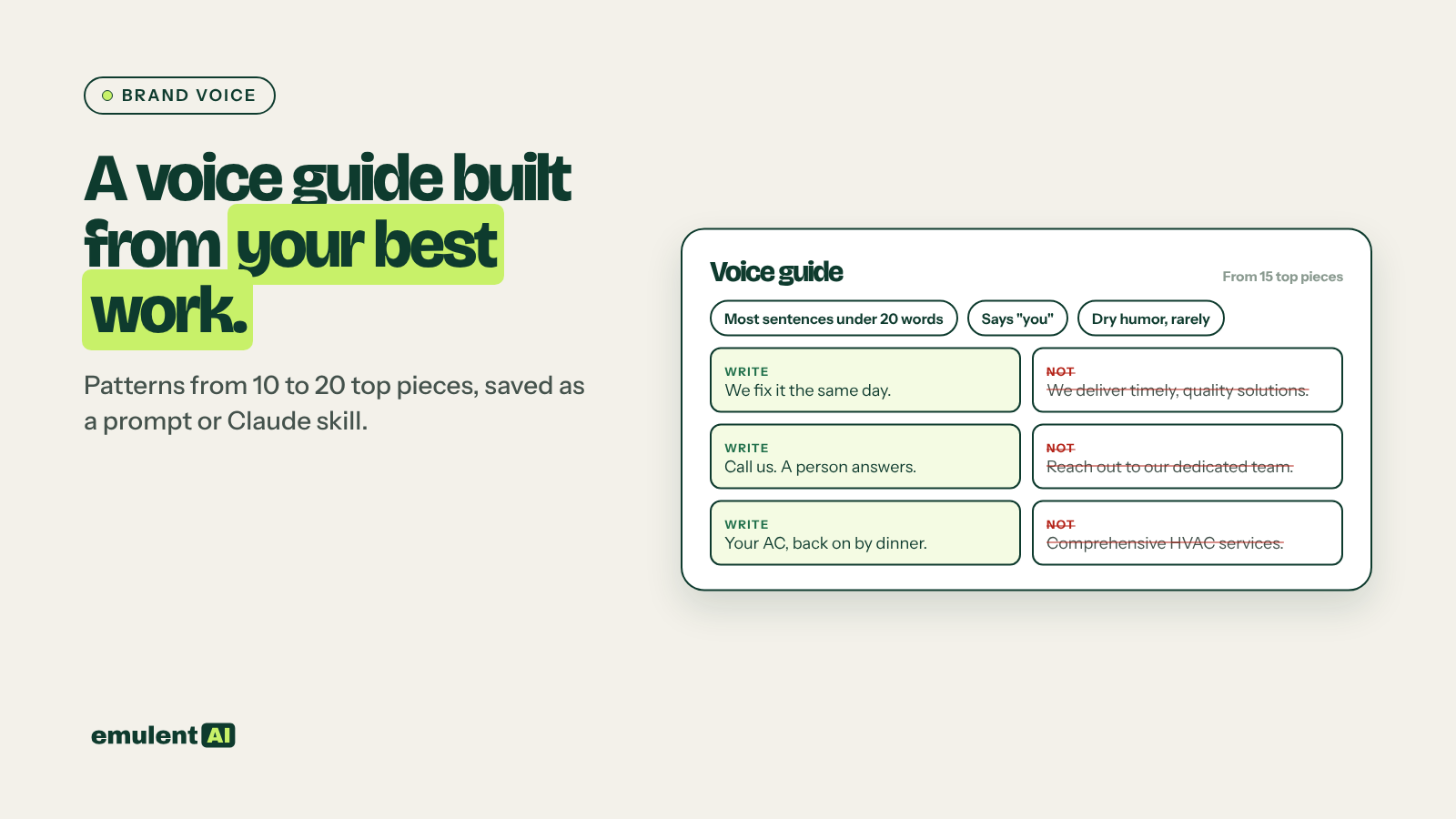
A brand voice guide tells every writer, and every AI tool, how the brand sounds. Most guides fail because they describe the voice in adjectives. “Friendly but expert” means something different to every person who reads it. A guide that works shows the actual habits: how long the sentences run, which words the brand uses and never uses, how it handles humor, and whether it says “you” or “customers.”
AI is good at finding those habits in a pile of writing. Give it 10 to 20 of the brand’s best pieces and it will describe what they share more precisely than most people can.
What you need
- An AI assistant that accepts file uploads, such as Claude
- 10 to 20 pieces of the brand’s best-performing writing: emails with the highest click rates, the blog posts that bring leads, the ads with the best results, sales pages that convert
- Two or three pieces the brand considers off-voice, if anyone has them
- Any existing brand guide, even an old one
Step 1: Pick the pieces by results
Choose by performance data, not by what the team likes. Pull the top emails from your email platform, the top landing pages and posts by leads in GA4, and the best ads by conversion rate. Mix the formats, so the guide covers short and long writing.
If the brand has never measured its writing, pick pieces that customers have responded to in other ways: the post people still mention on sales calls, the email that got replies.
Step 2: Have AI describe the patterns
Upload the pieces as text files or PDFs and use this prompt:
Attached are 15 pieces of writing from one brand, chosen because they performed
best. Describe the voice they share, using only evidence from the files:
1. Average sentence length and how much it varies. Quote 3 short and 3 long
   sentences.
2. Words and phrases the brand uses often. Words a typical brand in this
   industry would use that this brand avoids.
3. How it addresses the reader (you, we, they) and how formal it is.
4. How it handles humor, if at all. Quote examples.
5. How it opens and closes a piece.
6. How it makes claims: numbers, examples, customer quotes or adjectives.
For every point, cite which file it came from. Do not describe anything you
cannot show with a quote.
The citation rule keeps the AI from describing a generic “professional yet approachable” voice that the files do not support.
Step 3: Turn the patterns into rules
Ask for the guide in a format a writer can use:
Turn this analysis into a one-page voice guide with these sections:
- Voice in two sentences
- Do: 8 to 10 rules, each with a short example from the files
- Don't: 8 to 10 rules, each with a "write this, not that" pair
- Word list: words we use, words we never use
- Formatting habits: headings, lists, length, punctuation
Write the rules as instructions, for example "Keep most sentences under
20 words" instead of "The brand favors concise sentences."
If you have off-voice examples, add them and ask the AI to explain what makes them wrong. Those contrasts often teach more than the rules.
Step 4: Test the guide before you trust it
Give the guide to the AI in a fresh conversation, with no access to the original pieces, and ask it to write a short email and a social post on a real topic. Then show the drafts to the person who knows the brand best and ask one question: would you send this? Note what they change. Each change is either a missing rule or a rule that is wrong. Update the guide and test again.
Step 5: Save it where everyone uses it
A voice guide in a PDF gets read once. Put it where the writing happens:
- As a custom instruction in a Claude project, so every chat in that project starts with it
- As a Claude skill, with a name and description at the top, so it loads whenever someone asks for brand writing. Our human2026 skill shows the format.
- As a pinned document in the team’s shared drive, linked from the content brief template
Use the voice guide alongside a list of general AI writing tells, so drafts sound like the brand and not like a chatbot.
Checks before you roll it out
- Confirm every example quote in the guide exists in the source files. AI sometimes “improves” a quote while copying it.
- Check that the word list does not ban terms the industry requires, such as legal or medical terms.
- Revisit the guide every six months with the newest top performers. Voices change as brands grow.
The voice guide is also the standard for a brand consistency audit, and the customer language from review mining belongs in its word list.
Put this to work with Bill.
Tell Bill about your next brand or website project. He’ll tell you which of these jobs to hand to AI first.
Contact Bill directly
Or call 773-791-3197