This guide is part of our series on AI for branding and design.
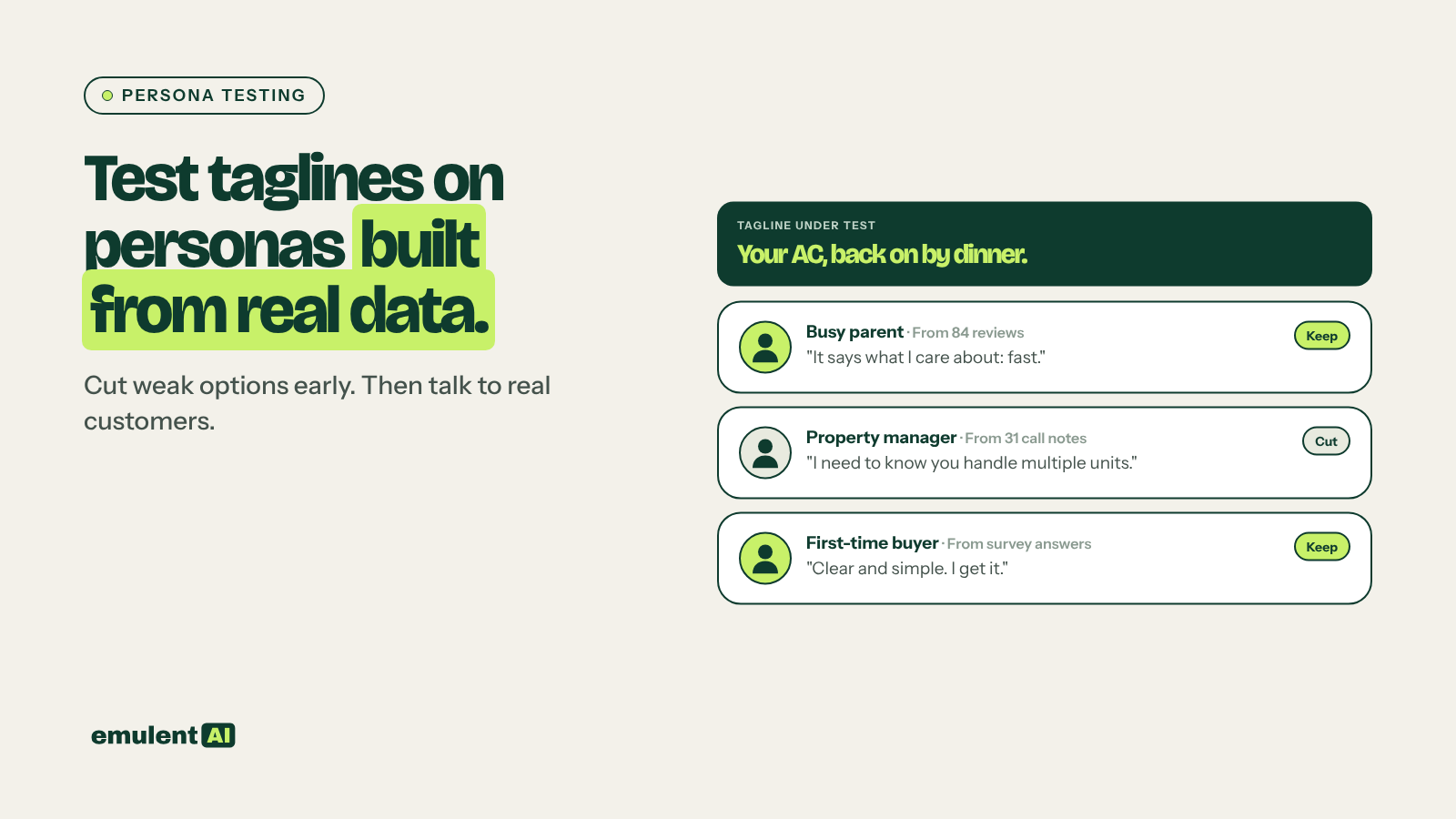
A tagline or headline usually gets picked in a meeting, by people who already know the business. AI personas let you hear from something closer to a customer before you spend money on a campaign. You build each persona from real customer data, then ask it to react to your options and explain its reasoning.
Used well, this cuts weak options fast. Used badly, it gives you confident feedback from customers who do not exist. The difference is the data you build the personas from, and remembering that a persona is a summary of customers, not a customer.
What you need
- An AI assistant that accepts file uploads, such as Claude
- Real customer material: reviews, sales call notes or transcripts, survey answers, support tickets, win and loss notes from sales
- The options you want to test: taglines, headlines, positioning statements or offer descriptions
- At least three or four customer conversations you can still have after testing
Step 1: Gather and clean the customer data
Export reviews from Google, industry review sites and the client’s own testimonials. Pull 20 to 50 sales call summaries if the CRM has them. Add open-ended survey answers. Remove names, emails and phone numbers before anything goes into an AI tool, and check the tool’s data settings on your plan.
Step 2: Build personas from patterns in the data
Attached are reviews, call notes and survey answers from our customers.
Group the customers into 3 to 5 segments based on what they say: the problem
that brought them to us, what they compared us with, what nearly stopped them
from buying, and what they value now.
For each segment write a persona with:
- The situation that triggers the search
- Their words for the problem (quote the data)
- What they worry about before buying
- What they compare us with
- What would make them say no
Every point must quote or cite the source data. If the data does not support
a point, write "not in data" instead of guessing.
Read the personas against what the sales team knows. If a segment surprises them, look at the quotes behind it before you accept or drop it.
Step 3: Run the options past each persona
Test options side by side, not one at a time, so the AI has to compare:
You are [persona name], described below. Here are 6 tagline options for
[business]. For each one:
1. What do you think the business does, based only on this line?
2. Does it speak to the problem in your own words? Quote the persona data.
3. What would make you skip past it?
Then rank the 6 from most to least likely to make you look closer, and
explain the top and bottom choices.
Run the same test for each persona in a fresh conversation, so one persona’s answers do not color the next.
Step 4: Read the results as filters, not votes
Look for options that fail across every persona, and for misreadings: a tagline that makes three personas think the business sells something it does not. Those are the reliable signals. Cut those options.
Be skeptical of rankings among the options that survive. Small differences in a persona’s ranking mean little, because the persona is predicting how a customer might react, based on text. Take the two or three survivors to real people.
Step 5: Check with real customers
Show the shortlist to four or five real customers or prospects, in a short call or a simple survey. Ask the same questions you asked the personas. Where real people and personas disagree, real people win, and the disagreement tells you which part of the persona data is thin.
Checks before you act
- Do not let personas replace research for big decisions such as a rebrand or a new market. Use them to narrow options before that research.
- Watch for personas that sound like marketing copy. If a persona “loves innovative solutions,” the data behind it is too thin.
- Keep the personas and the source data together, and rebuild them when you have six months of new reviews and calls.
The phrases from review mining make strong test options, and the open space on a competitor positioning map tells you which positioning statements are worth testing at all.
Put this to work with Bill.
Tell Bill about your next brand or website project. He’ll tell you which of these jobs to hand to AI first.
Contact Bill directly
Or call 773-791-3197